


Electrical and Electronic Engineering: NQ (Level 5)
Read more
Shape the world around you with advanced skills in Computer Aided Design and 3D visualisation.
This two-year HND in Computer Aided Draughting and Design (Computer Aided Design – CAD) gives you the practical skills and technical knowledge needed to turn ideas into accurate 2D drawings, detailed 3D models, and fully realised prototypes. You’ll learn how modern design industries—from engineering and manufacturing to architecture and product design—use CAD to solve problems, speed up production, and bring innovative concepts to life.
Taught by highly experienced lecturers with backgrounds in engineering, automotive design and architectural practice, the course combines hands-on project work with the latest digital tools, including 3D modelling, rapid prototyping, 3D printing, 3D scanning and immersive visualisation. You’ll build confidence across industry-standard workflows while developing a strong portfolio of technical drawings, digital models and professional-quality design outputs.
Whether you’re aiming for employment in engineering and construction, a role in product or industrial design, or progression to degree-level study, this HND provides the digital design skills, practical experience and confidence to succeed in a rapidly growing sector.
This course is ideal for:
Across this two-year programme, you’ll gain a comprehensive understanding of computer-aided design and digital visualisation — from technical drawing fundamentals to cutting-edge 3D modelling and prototyping.
Year 1 – Core Design Foundations
You’ll begin by developing the essential skills needed to produce accurate and professional drawings using leading CAD software. You will:
Year 2 – Advanced Design & Industry Practice
Once confident with the fundamentals, you’ll move into advanced applications and professional practice. You will:
By the end of the course, you’ll have a comprehensive portfolio demonstrating your ability to design, model and communicate ideas effectively across multiple disciplines.
You’ll gain real-world experience through practical lab sessions, project design, and collaboration with industry professionals.
 |
 |
 |
 |
 |
 |
 |
 |
 |
 |
 |
 |
 |
 |
 |
 |
 |
 |
 |
 |
 |
🎓 Hear from Liam | Computer Aided Design
Liam talks us through what the Computer Aided Design course covers and how it prepares students for a future in design and engineering.
From developing technical drawing skills to working with industry-standard software, the course equips students with the practical knowledge and confidence needed to progress into further study or employment.
Design. Precision. Innovation.
To join this course, you’ll need one of the following — or a strong interest and relevant experience in design or engineering:
✅ A Higher, ideally in a technical, design or STEM subject OR
✅ Successful completion of an NQ or NC in a related field, OR
✅ Achievement of a Foundation Apprenticeship in Engineering, OR
✅ Equivalent qualifications or professional experience
ℹ️ For this course, if English is not your first language
Graduates can progress into a wide range of roles across engineering, construction and design, including:
🧩 CAD Technician
🏗️ Architectural or Geotechnical BIM Technician
🛠️ Assistant Design Manager
📐 Industrial or Product Design Engineer
🏠 Architectural Technician or Roof Truss Designer
⚙️ CAD Coordinator or Senior Designer
Our teaching team brings industry experience from the automotive and architectural sectors, ensuring your learning stays relevant to current industry practices.
After completing your HND, you can progress to:
The CAD teaching team have worked across industries including the luxury Automotive sector and Architecture. This means we can provide a unique insight into the world of work, give real life examples of how what we’re teaching you is relevant in a very dynamic and fast changing environment.
 CAD and its associated technologies are at the forefront of environmental awareness. Everything that is manufactured in the world will have CAD tech associated with it. Designing products and educating within CAD means that we don’t have to use lots of paper wastage (we have reduced paper waste by 95%) and can also teach one of our days online. This reduces unnecessary travel to the college and promotes confidence in our learners to work effectively remotely.
The utilisation of CAD has led to less wastage of pre-production components. VR (Virtual Reality) is at the forefront of this change, building components and being able to see them in 3D through the user headsets, means that we can delay actual production of test components and that means less wastage going to landfill.
* these videos only contain visuals with background music, there are no voiceovers
Hi there, I'm Liam. I'm doing the HND CAD course, computer aided design and drafting at Glasgow Kelvin College.
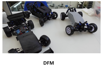
What I've got here is a concept for an RC car. I'm getting given to do that through the year till March, since a wee race at the end of it. What I've got here is like rough sort of ideas. It's just an odd shape. Here's an outline of the image I've got here. An Arthetic Core GTR.
We use the 3D printers, parts like this chassis under here. We'll 3D print them and sort of do trial and errors. Do the CAD on here, then export a file and it'll come off on the 3D printer. Eventually at the end we'll have a working car. We'll use like this sort of marking gauge thing. It gives us precise sizes for when we're 3D printing. It's good for us to sort of get used to going into the world.
The great thing about the course is you can do it in college and also at home. But after the college, I'd either apply for a uni on more design stuff. 3D design for games, or it might just be 2D drawings on AutoCAD, or just go straight into an apprenticeship or get a job. I couldn't go into any sort of engineering space, as it is just design, so it's quite freeing.
Don't let the fact that it is a HND put you off. I've done fifth year and didn't do sixth year and I came here and it's probably the best decision I've made. I didn't really think sixth year at school was for me and I had my mum and dad. They backed me the whole way. I know some people kind of thought not doing sixth year means you're not doing your exams and you don't like to do well but I went out of school with three highers and came in here and done this and ever since, life just got better.


