



Engineering: NQ (Level 4)
Read more
Spark your future in engineering — where creativity meets technology.
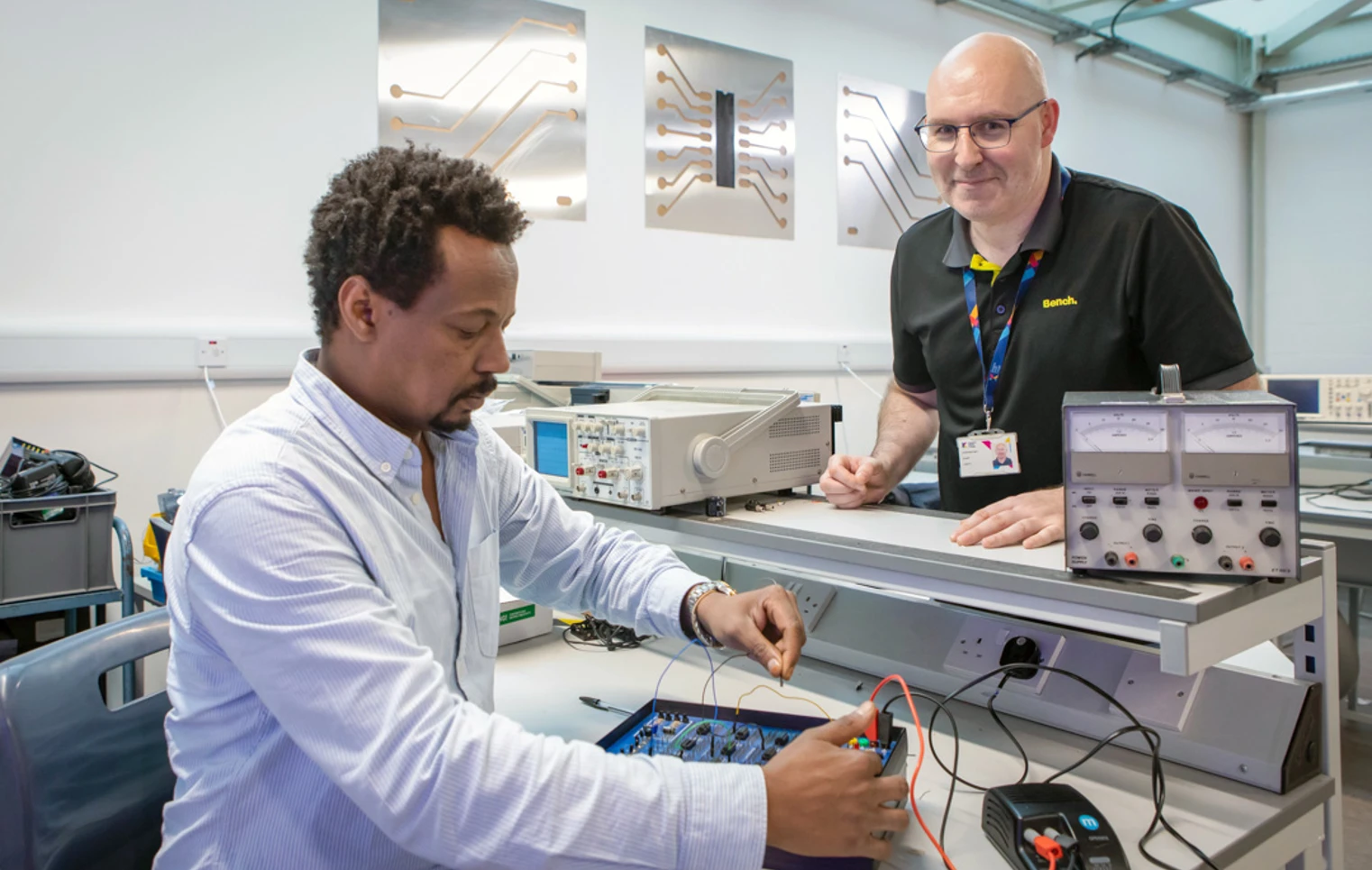
This NQ Electrical & Electronic Engineering Level 5 course at Glasgow Kelvin College introduces you to the fundamentals of electrical systems, electronics, and renewable energy technologies. You’ll gain a balance of theory and hands-on experience, working in our fully equipped engineering labs and workshops.
You’ll learn how electrical circuits work, how to test and measure components, and how to assemble and troubleshoot systems — all while building confidence, precision, and problem-solving skills. This course gives you a strong foundation to progress into further study or start your journey toward an apprenticeship or career in the industry.
You’ll even receive your own tool kit, multimeter, and electronic microcontroller project kit, which you can keep at the end of the course.
This course is ideal for you if you:
You’ll combine classroom learning with extensive practical work, exploring the principles that power modern technology.
Theory and Concepts
Practical Skills
By the end, you’ll have gained a clear understanding of how electrical and electronic systems are designed, built, and maintained in industry.
Considering Electrical Engineering? ⚡
Edward, one of our Electrical Engineering students, shares his advice for anyone thinking about studying at Glasgow Kelvin College.
In this video, he talks about developing practical, hands-on skills, gaining valuable industry knowledge, and what it’s really like to be part of the course.
Hear first-hand how studying Electrical Engineering can open doors and help you take the next step towards a rewarding career.
You can join this course through one of the following routes:
✅ Minimum of Four National 4 qualifications, including Mathematics and a Science subject OR
✅ Successful completion of NQ Level 4 Engineering OR
✅ Relevant industry experience (applications welcomed from adults returning to study)
We particularly encourage female applicants interested in starting a new career in engineering.
ℹ️ Entry is competitive — applications should clearly demonstrate your enthusiasm, relevant experience, and commitment in your personal statement.
ℹ️ For this course, if English is not your first language
Graduates of this course can look forward to early roles such as:
⚙️ Engineering Apprentice
💡 Electrical Technician Assistant
🔋 Junior Electronics Assembler
🛠️ Maintenance Assistant
⚡ Trainee Energy or Utilities Technician
You may also progress to a Modern Apprenticeship with energy companies, contractors, or local authorities.
Successful completion allows progression to:
These pathways lead to exciting careers in renewable energy, automation, or advanced manufacturing.
Hi, I'm Edward. I am studying Electrical and Electronic Engineering here at Glasgow Kelvin College.
When I first applied, I was actually a bit scared because it's engineering. It's one of the hardest subjects you can do.
After the first month, meeting all the lecturers, they made it really easy to learn.
One of my favorite classes is combination logic. So learning about microchips, how the function logic gets, it sounds very intimidating. And for someone that had never really done it before, I came in blind. Honestly, I picked it up after a few months
I started off when I was a teenager as a chef, then graphic designer, and now I'm back again as an adult to study engineering. It's been a long road and it took me a long time to realise what I wanted to do.
If you're hesitant about it, if you show up, at least you can say you tried. Don't be put off by the maths. Get out of it what you put into it. So if you're willing to put in the work, then it's definitely possible.
At the moment, I'm still thinking that I've got a few different paths. Renewable energy in the electronic sector, plant maintenance, windmill maintenance, maybe even working offshore.


