



Engineering: NQ (Level 4)
Read more
Start your journey into rail engineering with hands-on skills, industry experience, and real career opportunities.
The NQ Mechanical and Electrical Engineering – Rail (SCQF Level 5) prepares students for a career in the rail engineering industry.
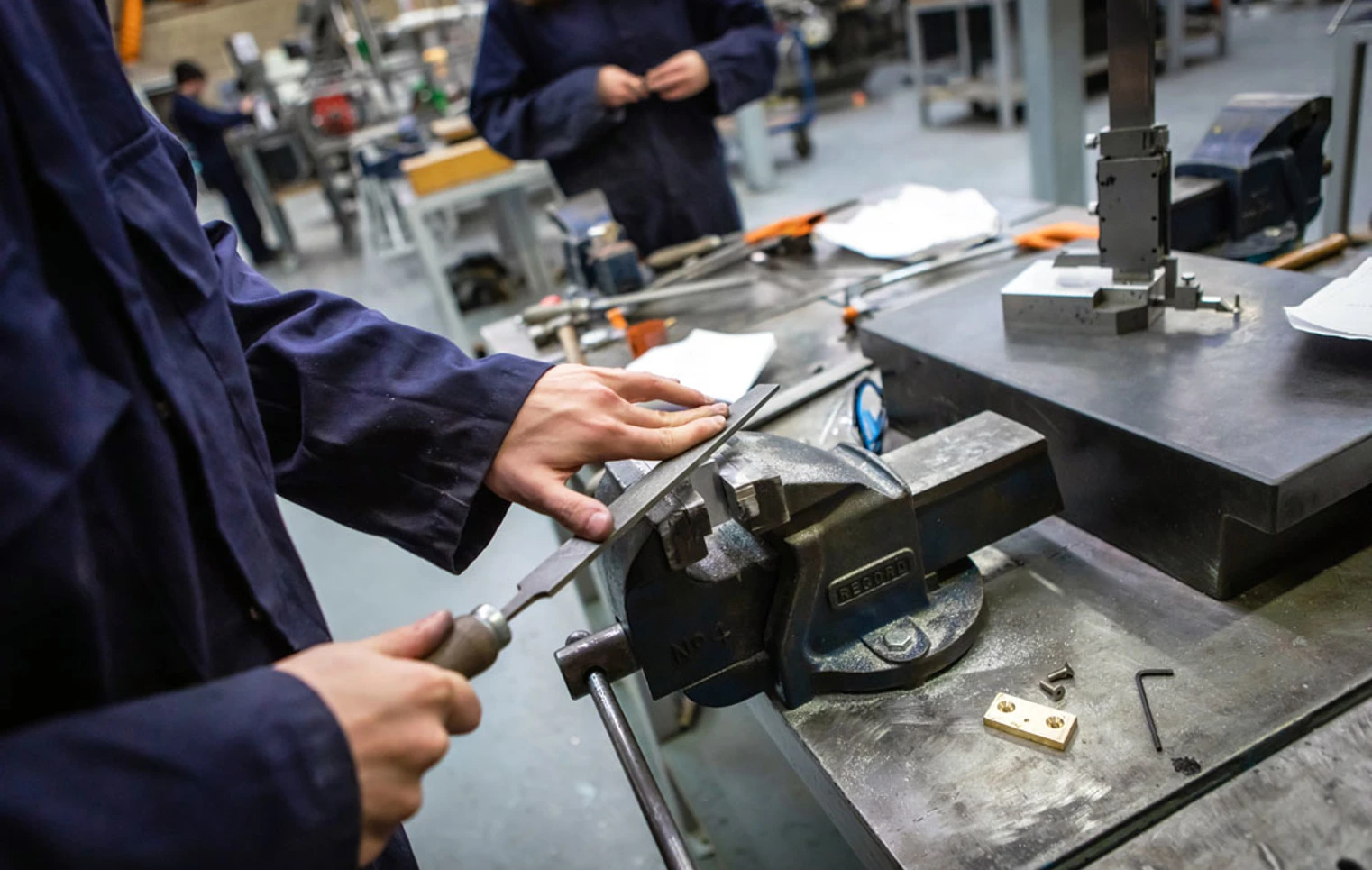
The course provides a strong foundation in mechanical and electrical engineering, combining practical workshop activity with essential theoretical learning. Students develop the core knowledge, skills and behaviours required to work safely and effectively within rail and wider engineering environments.
Learning integrates engineering theory, hands on skills and core subjects such as mathematics, ICT and communications, with content contextualised to rail applications to link college study with real world industry practice.
As part of the programme, students engage with rail industry partners during the academic year, gaining insight into the sector and completing industry relevant training and mandatory qualifications. Eligible students will also have the opportunity to earn while they learn by working in the rail industry alongside their studies.
This course is ideal if you:
This course delivers a broad, practical and industry relevant curriculum designed to support progression into rail engineering roles. Learning covers both mechanical and electrical engineering, reflecting the multidisciplinary nature of work within the rail industry.
You will develop skills and knowledge in:
Telecoms and Rail Systems Preparation
As part of preparation for work in the rail industry, students will be introduced to rail telecoms and signalling related principles, including cable installation fundamentals, fibre optic concepts, testing methods and basic networking awareness. This provides essential underpinning knowledge aligned to industry practice and supports progression into telecoms, signalling and wider rail infrastructure roles.
Learning is contextualised to engineering and rail applications wherever possible, ensuring strong links between college based study and employment in the rail industry.
Rail Industry Engagement During the College Week
As part of the college based learning week, eligible students will work with rail industry partners to:
This integrated approach ensures students are fully prepared for employment in the rail industry and understand the expectations, safety culture and professional standards required by rail employers.
Glasgow Kelvin College has partnered with SWGR, a major rail employer based in Glasgow, to provide eligible students with the opportunity to work in the rail industry alongside their studies.
Once suitably qualified, students may begin working with SWGR early in the course, carrying out paid work out with their college timetable. Typically, students may work three to four shifts per week, with the potential to earn around £25,000 per annum, depending on shifts and availability.
Rail infrastructure work is typically undertaken during nightshift and out of hours periods, which can offer flexibility when balancing work, study and family commitments. There are also opportunities to travel to different sites, with vehicles provided where required.
This model allows students to earn and gain valuable industry experience while completing their qualification at Glasgow Kelvin College.
Preparation for Work on the UK Rail Infrastructure
Preparation for working on the UK rail infrastructure forms a core element of this course. All required preparation for employment with SWGR will be provided as part of the programme, including:
Once suitably qualified, students can begin working in the rail industry while continuing their studies at Glasgow Kelvin College.
From College to the Rail Industry 🚆⚡
Meet Rachel, a former Glasgow Kelvin College Rail Engineering student who is now working with SWGR in railway electrification.
Rachel shares how studying at Kelvin helped her develop the mechanical and electrical skills needed for the industry, before progressing into a hands-on role working on overhead lines across Scotland.
She also talks about gaining further railway competencies through SWGR, the importance of health and safety on the railway, and how far she has progressed since first starting the course.
Her advice to anyone considering a career in rail engineering?
“Go for it, don’t be scared.”
You can join this course through one of the following routes:
✅ Are eligible to work in the rail industry – see below, AND
✅ Minimum of four National 4 qualifications, including Mathematics, OR
✅ Successful completion of NQ Level 4 Engineering, OR
Applications welcomed from adults returning to study or looking for employment
We particularly encourage female applicants who are interested in starting a new career in engineering and those that meet the work eligibility criteria.
Entry is competitive, and applications should clearly demonstrate your enthusiasm, relevant experience and commitment to the course within your personal statement.
ℹ️ Eligibility to work in Rail
To work within the UK rail industry, you must meet the following legal and industry requirements:
These requirements apply specifically to rail industry employment and are separate from the academic entry requirements for the course.
ℹ️ For this course, if English is not your first language
This course prepares you for progression into engineering apprenticeships and entry-level roles across sectors such as rail, manufacturing, construction, and maintenance.
Typical roles include:
⚙️ Engineering Apprentice
🔧 Mechanical Engineering Operative
⚡ Electrical Engineering Operative
🏭 Manufacturing or Production Operative
🛠️ Maintenance Assistant
🚧 Rail Engineering Operative
Successful completion of the NQ Mechanical and Electrical Engineering (Level 5) course will strengthen your chances of
You will also have the opportunity to progress to further study at SCQF Level 6, including courses such as:
These progression routes support continued development within the engineering sector and help prepare you for skilled roles or further training.
Build Your Future in Rail Engineering 🚆⚙️
Discover how Glasgow Kelvin College and SWGR are working together to develop the next generation of rail engineers.
Hear from Assistant Principal Peter Brown and Stuart Munro from SWGR as they explain how this partnership combines practical college learning with real industry experience to prepare students for careers in the rail sector.
Students develop skills in mechanical, electrical and telecoms engineering while gaining valuable workplace experience through an earn-while-you-learn model.
Real industry. Real experience. Real careers.
Hi, I'm Rachel Mills. I previously studied Access to Railway Engineering at Glasgow Kelvin College. Now I currently work with SWGR.
I work on the overhead lines, so it's electrification. I'm an airframe assistant and I also previously got my controller of site safety through SWGR.
I love being out on site. It's so different from what you're used to. I work night shift and it's all over Scotland and it's just something different.
Everybody that I work with is so helpful. To do my job you need mechanical and electrical skills.
verhead wires and that's mainly because there's mechanical or maintenance workers that are going to come out on the track after you.
Health and safety is very important in the railway industry and getting that ticket has showed me just how important that is as well and it's through my work that I realise this.
When I applied to this course I didn't really know what I was going to get myself into. I knew it was really engineering but the way that I've progressed since I've started it has been amazing so I would say anybody that's wanting to apply go for it, don't be scared.
Peter: Hi, I'm Peter Brown from Glasgow Kelvin College. I'm Assistant Principal here with Stuart Munro from SWGR.
I'm really excited with the partnership. Next session, we will be running a real engineering course, NQ, Level 5, predominantly mechanical, electrical and telecoms engineering. I would like to discuss with Stuart and why this course is important.
Stuart: The railway's going through a huge skills challenge at the moment. There are various skills in engineering that we simply don't have enough people.
We're trying to give people opportunity in what is a socially deprived part of Glasgow. We've managed to tailor certain elements of the railway engineering to that course so that they get the education and they get the practical experience.
When students come here to learn, we give them various different training courses and certain railway competencies.
One of the competencies is their personal track safety so that they understand how to operate safely on the track. We isolate the overhead line to make it safe to work on. That involves opening switches to cut the energy that's going through the power lines and then earthing the residual current using
They'll come to SWGR part-time and get some relevant work experience.
The big focus for us is retaining those skills. Railway as a demographic has a lot of folk going towards retirement. It's an industry that doesn't have the right diversity balance either. We need to try and address that.
Peter: One of the major advantages of this programme is it's an earn well you learn model.
During your time at Kelvin you will come to our Springburn campus where you will learn different aspects of engineering. With college within the same week you will go out with SWGR, learn those industry skills and get the opportunity to have paid employment.


