


Civil Engineering: NQ (Level 6)
Read more
Spark your future in engineering — where creativity meets technology.
This NQ Mechanical and Electrical Engineering Level 5 course at Glasgow Kelvin College introduces you to the fundamentals of mechanical systems, electrical systems, electronics, and renewable energy technologies. You’ll gain a balance of theory and hands-on experience, working in our fully equipped engineering labs and workshops.
You’ll learn how mechanical systems and electrical circuits work, how to test and measure components, and how to assemble and troubleshoot systems — all while building confidence, precision, and problem-solving skills. This course gives you a strong foundation to progress into further study or start your journey toward an apprenticeship or career in the industry.
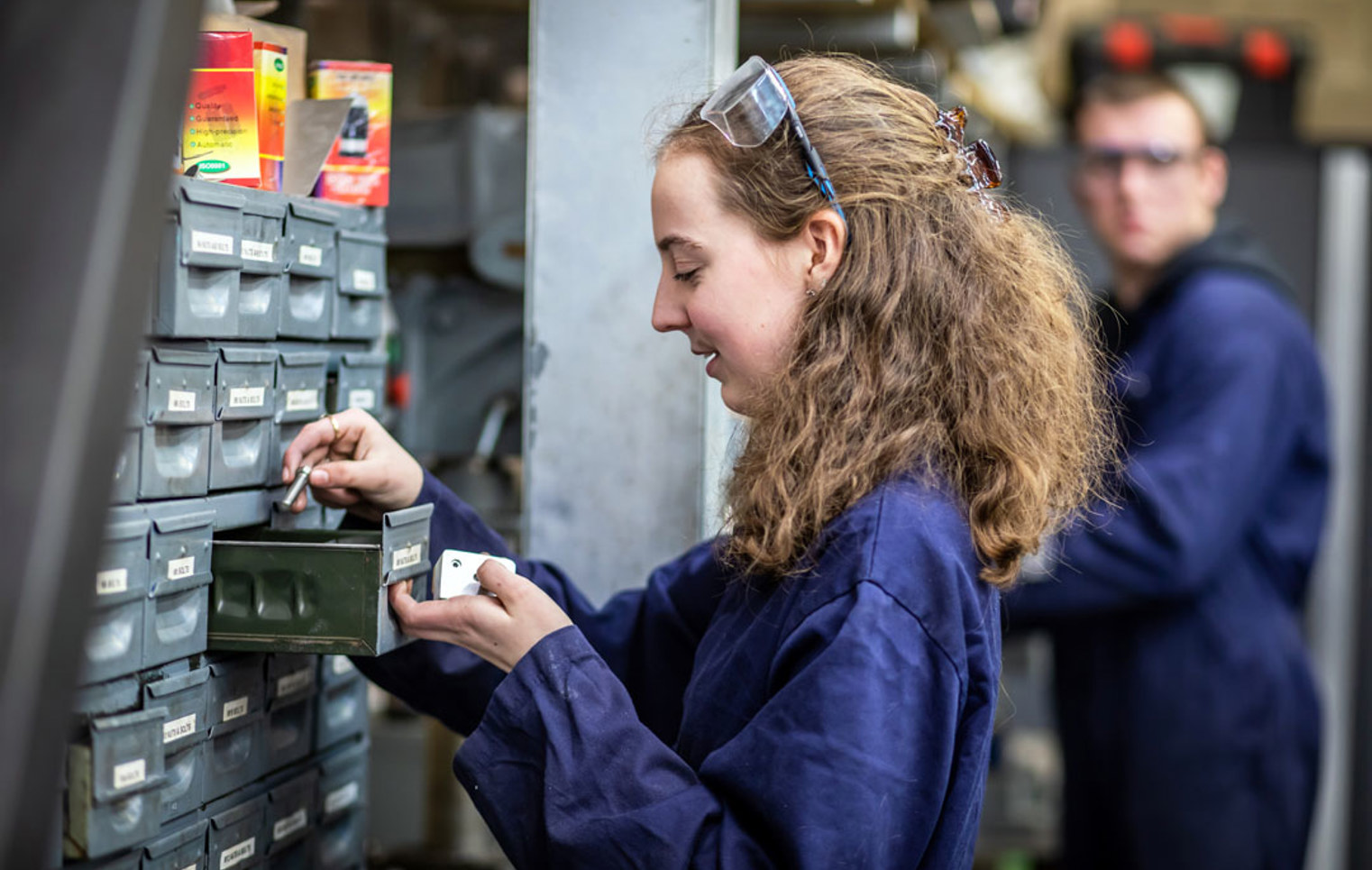
You’ll learn in our fully equipped laboratories and workshops, applying classroom theory directly through projects that bring engineering to life. Recent students have designed, built and raced robot cars, developing real-world problem-solving and teamwork skills.
This course is the perfect first step if you’re aiming for an apprenticeship, an NC/NQ (Level 6) qualification, or an eventual career in mechanical, manufacturing, electrical, or electronic engineering.
You’ll even receive your own tool kit, multimeter, and electronic microcontroller project kit, which you can keep at the end of the course.
This course is ideal for you if you:
Want to begin a practical career in Mechanical, Manufacturing, Electrical or Electronic Engineering.
Enjoy working with technology, tools, and prefer hands-on problem-solving and learning.
Are aiming to progress to higher-level study such as NQ Level 6, HNC, or an apprenticeship.
Are considering a career in Scotland’s growing renewables or manufacturing sectors.
You’ll combine classroom learning with extensive practical work, exploring the principles that power modern technology.
Theory and Concepts
Electrical Principles & Power Systems – understand voltage, current, resistance, and circuit behaviour.
Mechanical Engineering Principles – forces, motion and energy.
Mathematics & Communications – build the essential numerical and communication skills engineers rely on.
Electrical Machines & Safety – study motor types, control systems, and health and safety procedures.
Practical Skills
Electronic Circuit Building & Soldering – assemble, test, and troubleshoot electronic circuits.
Mechanical Engineering Workshop Skills – safe use of tools and equipment.
Software Programming – develop coding skills to control hardware and electronic devices.
Computer-Aided Design (CAD) – create accurate 2D and 3D drawings.
Engineering Materials – properties, testing and selection.
Electrical Testing & Wiring – gain experience using modern test instruments and tools.
Engineering Project Work – Use your mechanical and electrical skills to design, build, and race your own project vehicle.
By the end, you’ll have gained a clear understanding of how mechanical, electrical and electronic systems are designed, built, and maintained in industry.
You can join this course through one of the following routes:
✅ Minimum of Four National 4 qualifications, including Mathematics and a Science subject OR
✅ Successful completion of NQ Level 4 Engineering OR
✅ Relevant industry experience (applications welcomed from adults returning to study)
We particularly encourage female applicants interested in starting a new career in engineering.
Applicants may be asked to visit the college for a taster/information session where we can determine if this course meets your learning needs.
ℹ️ Entry is competitive — applications should clearly demonstrate your enthusiasm, relevant experience, and commitment in your personal statement.
ℹ️ For this course, if English is not your first language
you need to have QS ESOL National 5 (or equivalent, click here to see equivalent qualifications)
If you do not have a formal ESOL qualification but your language skills meet this level, you should apply for your course and then contact our Admissions team to organise an internal language assessment here at the College.
After completing this course, you can look forward to a host of great opportunities such as:
⚙️ Electrical, Mechanical, or Manufacturing Apprentice
🏭 Production Operator / Technician Trainee
💡 Engineering Workshop Assistant
🧰 Maintenance or Fabrication Technician
🛠️ Maintenance Assistant
⚡ Trainee Energy or Utilities Technician
Employers include energy companies, engineering contractors, manufacturing firms and local authorities.
On successful completion, you can progress to:
NQ Mechanical and Electrical Engineering (Level 6)
Access to STEM (pre-degree entry)
HNC Manufacture Engineering
HNC Electronic Engineering
HNC Electrical Engineering
HND Engineering
Or a Modern Apprenticeship in electrical, mechanical, or manufacturing engineering.
These pathways build the foundations for advanced technical study and skilled careers in many of Scotland’s most exciting and innovative industries such as renewable energy, automation, or advanced manufacturing.


